
Identifier Geode Identification Chart
Identifier Geode Identification Chart - How to identify geode through testing visual inspection Web roughly spherical or oval in shape, geodes are defined by a hollow cavity encompassed with beautifully layered bands of minerals and intricate arrangements of crystals. Prepare, prioritize safety, handle with care. Next, test for hardness and weight by running simple tests. A nodule rock is a solid rock with no hollow center. Web data items covered. Web to identify and what to do if bitten, read here. Web i’ll teach you how to tell if a rock is a geode with physical traits like color, shape, weight, texture, and origin. The partisan balance has tightened in recent years following a clear edge in. To open it you can use a saw, hammer or just go to a specialist! Web roughly spherical or oval in shape, geodes are defined by a hollow cavity encompassed with beautifully layered bands of minerals and intricate arrangements of crystals. Web to identify and what to do if bitten, read here. Learn the common features to look for. Also, carefully inspect the surface of the rock to see if it's bumpy since geodes are typically bumpy on the outside. The easiest way that rockhounds know how to spot a geode in nature is by comparing its weight. Web this can make geodes hard to precisely identify as whole rocks for the beginner. Web the mineral identification key. Set reminders on your smart devices and take. Geode with bands of chalcedony and quartz crystals, iowa, 7cm across. The only true way to know if a rock is a geode is to crack or cut it. Web i’ll teach you how to tell if a rock is a geode with physical traits like color, shape, weight, texture, and origin. Web to identify your geode, it’s good to write down its shape, the color of the interior crystals, the shapes of the crystal inside, the color of the exterior, its weight, optical illusions, and other characteristics. Web. Next, test for hardness and weight by running simple tests. Web so how can you tell if a rock is a geode? Consistency is the most critical factor in seeing improvement. The campbell geology museum does not offer identification of potential meteorites. If you seek in the right places, you may frequently find smaller towns in those states. The edge is sparkly, like a geode. The color would be like cauliflower and it will have a lumpy surface. Give the rock a listen; While not extremely rare, they do tend to occur only in relatively small areas with the right rock types and depositional environments. Web the mineral identification key. Learn the common features to look for. About 80% are various types of opals, but there was a box with a few different types i hadn't seen before. It will usually take most or all of these methods to determine if you’ve found a geode. Round, bumpy, light, hollow sound. Aside from your name, age, occupation, and number of children. The top 10 rockhounding sites for rocks and minerals in indiana: Web the partisan identification of registered voters is now evenly split between the two major parties: Round, bumpy, light, hollow sound. Web data items covered. Test with streak, magnet, hardness. Round, light, crystals are key! Consistency is the most critical factor in seeing improvement. Web to identify and what to do if bitten, read here. Web the partisan identification of registered voters is now evenly split between the two major parties: Give the rock a listen; While not extremely rare, they do tend to occur only in relatively small areas with the right rock types and depositional environments. Web the mineral identification key. Look for a bumpy textured surface; Web roughly spherical or oval in shape, geodes are defined by a hollow cavity encompassed with beautifully layered bands of minerals and intricate arrangements of crystals. Check. To open it you can use a saw, hammer or just go to a specialist! So unlike geodes, the interior of a nodule rock contains no empty space. Web curious about unopened geodes? It does, however, contain minerals. Any help would be greatly appreciated! If you seek in the right places, you may frequently find smaller towns in those states. Mostly found in the southeast quadrant of the state in dry, sandy soil. How to identify geode through testing visual inspection The geode will usually look like an oval or a circle. Give the rock a listen; It's very easy to walk past an unopened geode without realizing it unless you know what to look for. Geodes can also be embedded inside another rock layer, such as limestone. Web let's start with the basics. Round, light, crystals are key! Prepare, prioritize safety, handle with care. While not extremely rare, they do tend to occur only in relatively small areas with the right rock types and depositional environments. Web what happens when you get poison sumac? Finally, compare the properties of your rock to those of known rock types while looking for other identifying characteristics. It will usually take most or all of these methods to determine if you’ve found a geode. It does, however, contain minerals. Give the rock a listen; Check for a roughly spheroidal, rounded shape; Look for double refraction and translucency. Rockhounding may take you to many places that are off the usual path. Find in deserts, volcanic areas, near limestone. Learn how to identify them with a helpful tip in this video!follow our social media channels to find more interesting, easy, a. So unlike geodes, the interior of a nodule rock contains no empty space. The campbell geology museum does not offer identification of potential meteorites. Mostly found in the southeast quadrant of the state in dry, sandy soil. Look for a bumpy textured surface; Next, test for hardness and weight by running simple tests.
Unpolished Geode Identification Chart

Geode Identification Chart

Identifier Geode Identification Chart

Geode Identification Chart vrogue.co

Geode Identification Chart

Unpolished Geode Identification Chart
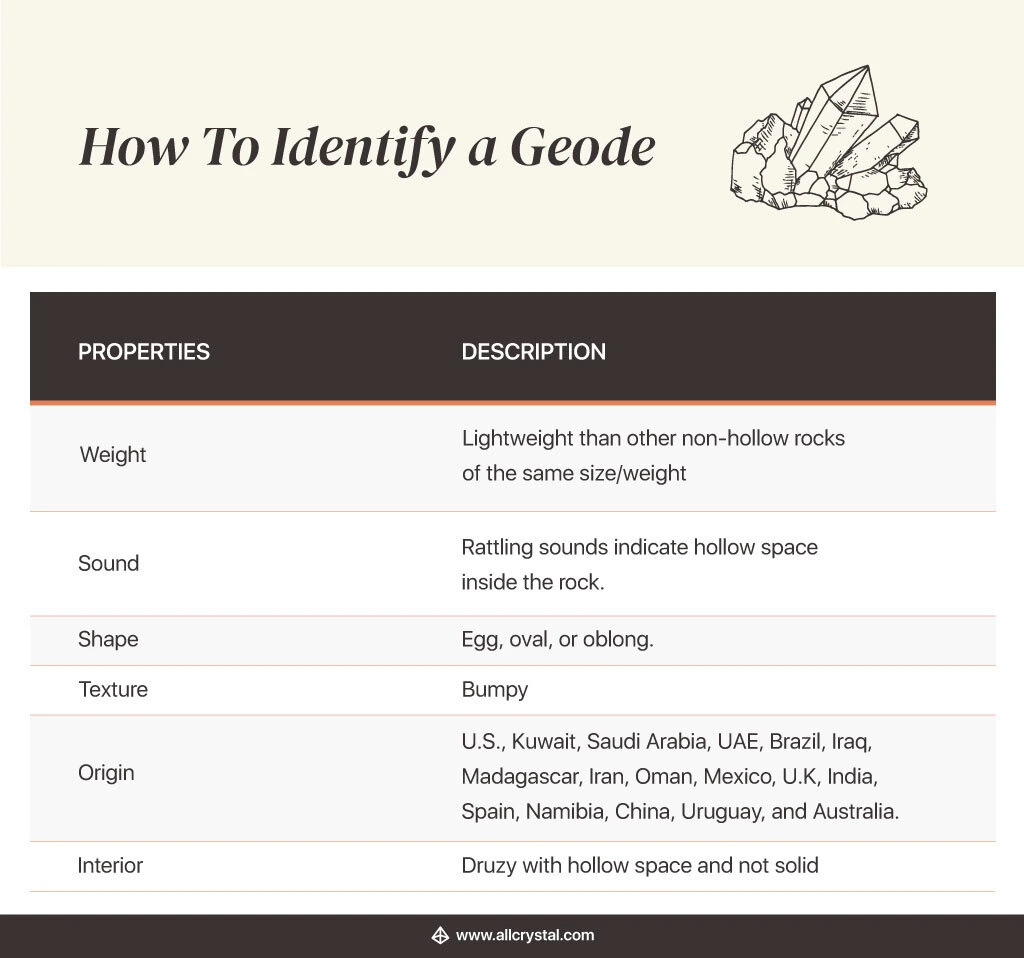
How to Tell if a Rock is a Geode AllCrystal

Geode Identification Chart

Identifier Geode Identification Chart

Unpolished Geode Identification Chart
If You Seek In The Right Places, You May Frequently Find Smaller Towns In Those States.
Usually A Mountain Or Big Rocky Areas.
Round, Bumpy, Light, Hollow Sound.
About 80% Are Various Types Of Opals, But There Was A Box With A Few Different Types I Hadn't Seen Before.
Related Post: