
Paediatric Burns Chart
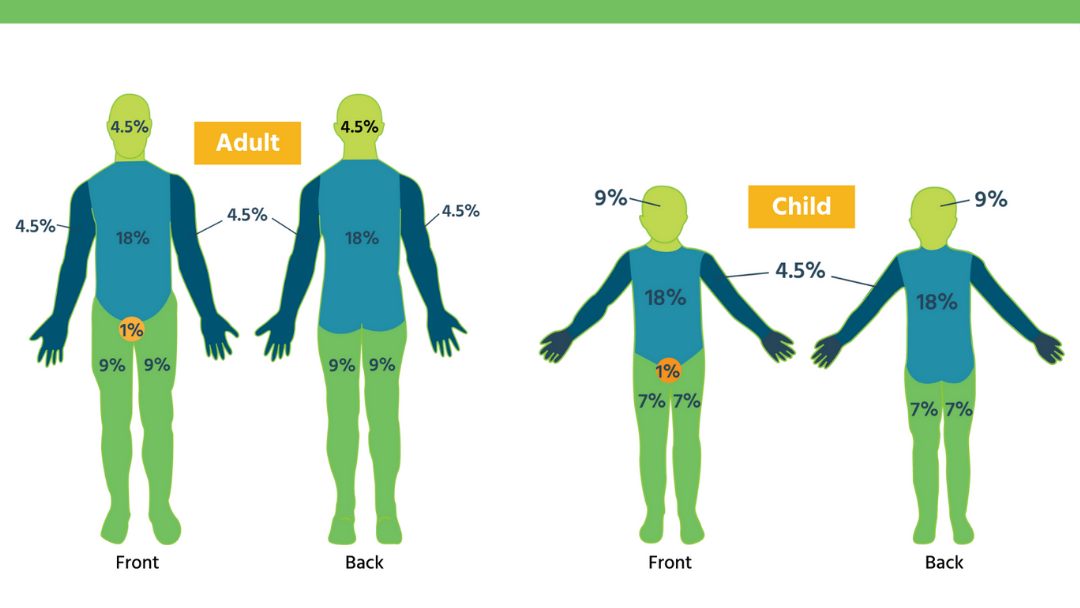
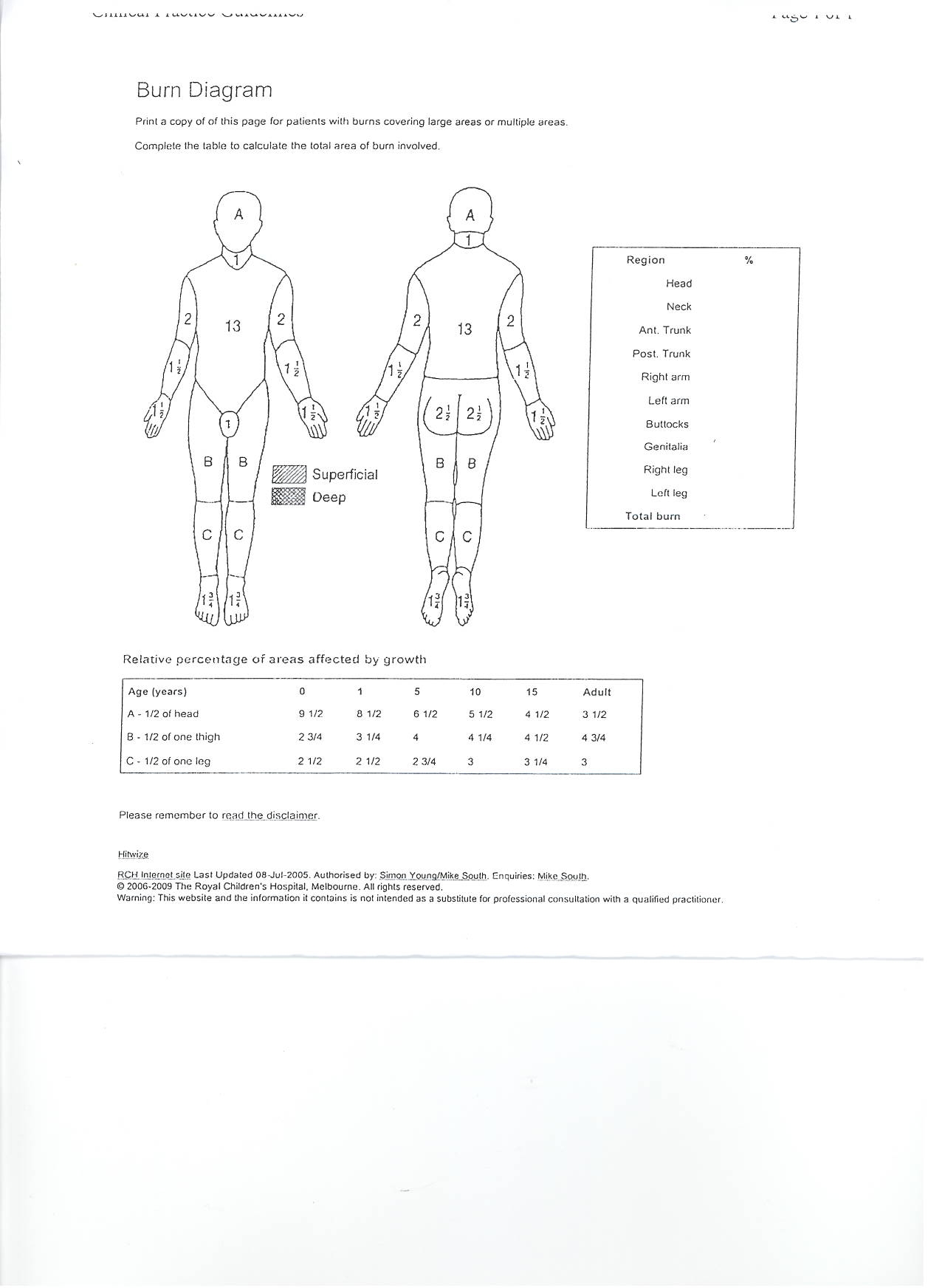
Paediatric Burns Chart - Web the goal is management of burns shock, through optimal replacement of fluid losses to maximise wound and body perfusion, and minimise wound and body oedema and associated adverse effects. The care of minor thermal burns, smoke inhalation, chemical burns to the skin and eye, electrical injuries, and ongoing burn management, are discussed separately. Web paediatric lund and browder chart. Web examine whether chest wall has been effective by burn as may develop respiratory failure from exhaustion and extreme pain; Web burn injuries healing prior to 3 weeks also have the potential to develop hypertrophic scarring, even when prescribed prophylactic conservative scar interventions. Web •to appropriately triage, diagnose and classify burns in the pediatric patient •to provide appropriate burn care management for inpatients, including fluid resuscitation, dressing changes, and pain management Roughly 25% of all burn injuries occur in children under the age of 15 years. This practice guideline will outline the essential elements of. An alternative rule is that the patient's palm and fingers represent 1% of the body surface. *infants and the elderly have thinner skin; Web the paediatric burns service is responsible for inpatient and outpatient treatment of children up to 16 years of age. Web this app includes many different calculators including estimating tbsa and fluids resuscitation. The care of minor thermal burns, smoke inhalation, chemical burns to the skin and eye, electrical injuries, and ongoing burn management, are discussed separately. Click on images to enlarge. The service provides the majority of paediatric burn care in sa and its catchment population includes metropolitan and country sa, nt and western parts of nsw and vic. Web examine whether chest wall has been effective by burn as may develop respiratory failure from exhaustion and extreme pain; Web the total body surface area (tbsa) of a burn was traditionally assessed using lund and browder burns chart that denotes the percentage of body surface and changes with age of the child (fig 2). *areas of difference between the pediatric and adult population are represented by bold italics. Burn injuries are common in children. Web appropriate burn wound care may necessitate multiple treatment modalities for different parts of a burn wound depending on the burn depth of each injured part. Web this app includes many different calculators including estimating tbsa and fluids resuscitation. Web burn injuries healing prior to 3 weeks also have the potential to develop hypertrophic scarring, even when prescribed prophylactic conservative scar interventions. An alternative rule is that the patient's palm and fingers represent 1% of the body surface. Over 300 children are admitted to our lady’s. Overestimation occurs when simple erythema is included. Paediatric burn and scald management in a low resource setting: Web the total body surface area (tbsa) of a burn was traditionally assessed using lund and browder burns chart that denotes the percentage of body surface and changes with age of the child (fig 2). A reference guide and review. Web burn injuries. Roughly 25% of all burn injuries occur in children under the age of 15 years. Web infant/pediatric lund and browder burn chart. *areas of difference between the pediatric and adult population are represented by bold italics. Web pediatric burns are injuries to the skin or other tissue as a result of exposure to heat (eg, hot liquids [scalds], hot solids. Newton browder, based on their experiences in treating over 300 burn victims injured at the cocoanut grove fire in boston in 1942. Web approximately 6,600 (17.5% of all trauma cases) are admitted for burns management. Charles lund, senior surgeon at boston city hospital, and dr. Female children are at increased risk, with most burns occurring in the kitchen or bathroom.. Burn injuries are common in children. The service provides the majority of paediatric burn care in sa and its catchment population includes metropolitan and country sa, nt and western parts of nsw and vic. Web appropriate burn wound care may necessitate multiple treatment modalities for different parts of a burn wound depending on the burn depth of each injured part.. The american burn association (aba) has published an educational resource that reviewed the classification and management of the burn wound. Web the paediatric lund and browder chart (modified rule of nines chart) should be used to enable accurate calculations. Web paediatric lund and browder chart. Guidelines on the management of children with burns. Burn injuries are common in children. Burns in children < 6 months of age. The incidence of burns is higher in children than in adults. Web the paediatric lund and browder chart (modified rule of nines chart) should be used to enable accurate calculations. Burns + inhalation injury or need to ventilate. The palm (including fingers), of the patient, equates to approximately 1% of the patient’s. (see treatment of minor thermal burns.) Web the lund and browder chart is a tool useful in the management of burns for estimating the total body surface area affected. Web approximately 6,600 (17.5% of all trauma cases) are admitted for burns management. The incidence of burns is higher in children than in adults. Web burn injuries healing prior to 3. Paediatric burn and scald management in a low resource setting: The palm (including fingers), of the patient, equates to approximately 1% of the patient’s body surface. Web this app includes many different calculators including estimating tbsa and fluids resuscitation. Web •to appropriately triage, diagnose and classify burns in the pediatric patient •to provide appropriate burn care management for inpatients, including. It was created by dr. Web greatest number of pediatric burn patients are infants and toddlers younger than 3 years of age burned by scalding liquids. Web the goal is management of burns shock, through optimal replacement of fluid losses to maximise wound and body perfusion, and minimise wound and body oedema and associated adverse effects. Overestimation occurs when simple. Female children are at increased risk, with most burns occurring in the kitchen or bathroom. Burns + inhalation injury or need to ventilate. Calculate requirements from time of. Over 300 children are admitted to our lady’s children’s hospital, crumlin (olchc) burns & plastics service each year. Burns in children < 6 months of age. The incidence of burns is higher in children than in adults. Circulation + control of external haemorrhage. Web the paediatric burns service is responsible for inpatient and outpatient treatment of children up to 16 years of age. (see treatment of minor thermal burns.) Web examine whether chest wall has been effective by burn as may develop respiratory failure from exhaustion and extreme pain; Superficial burns (erythema only) are not included in estimating burn tbsa. This practice guideline will outline the essential elements of. The palm (including fingers), of the patient, equates to approximately 1% of the patient’s body surface. Guidelines on the management of children with burns. The majority of admissions result from scalds, followed by contact and flame burns. The service provides the majority of paediatric burn care in sa and its catchment population includes metropolitan and country sa, nt and western parts of nsw and vic.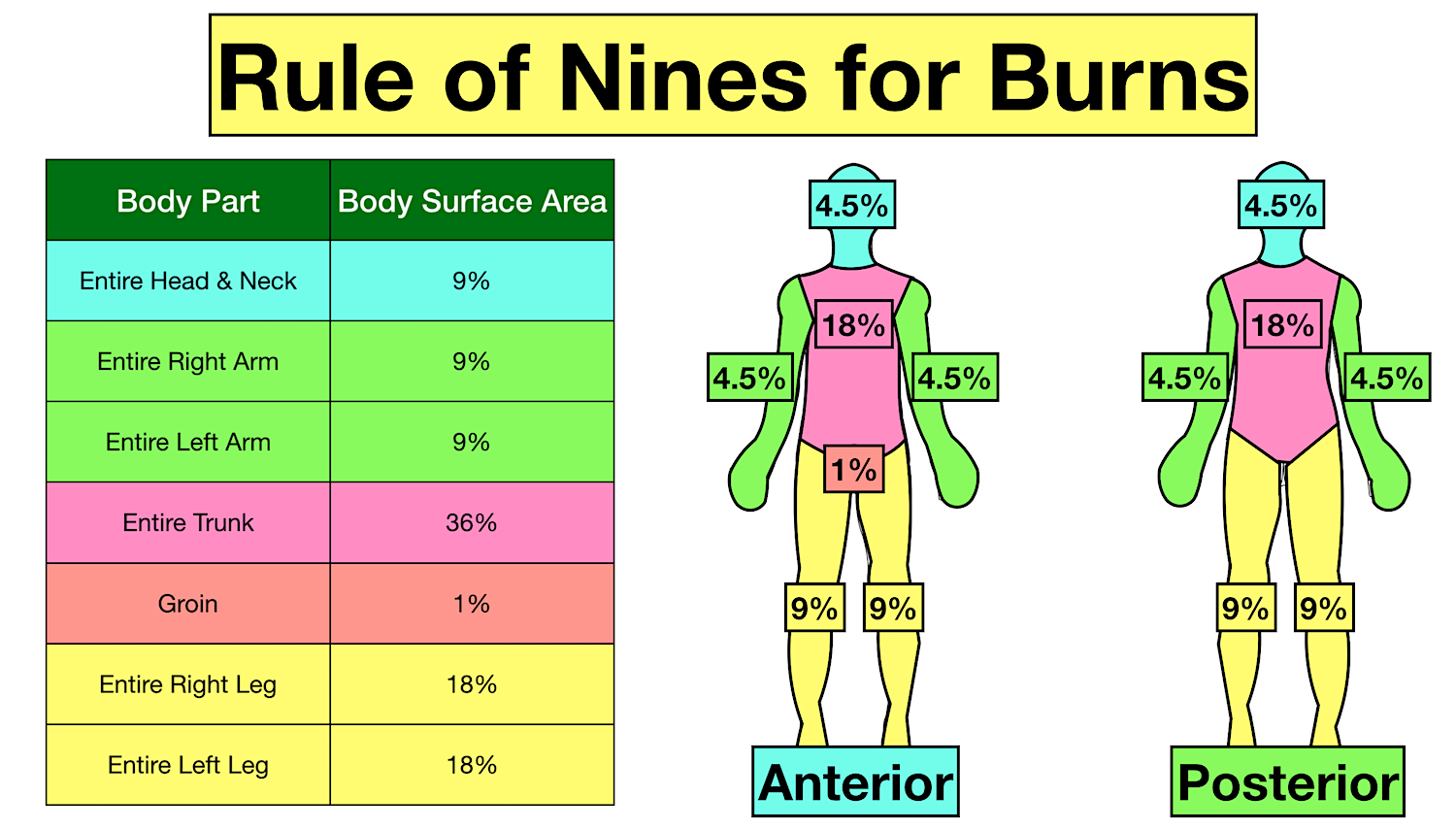
Rule of Nines for Burns Child and Adult Chart, Calculator, Definition
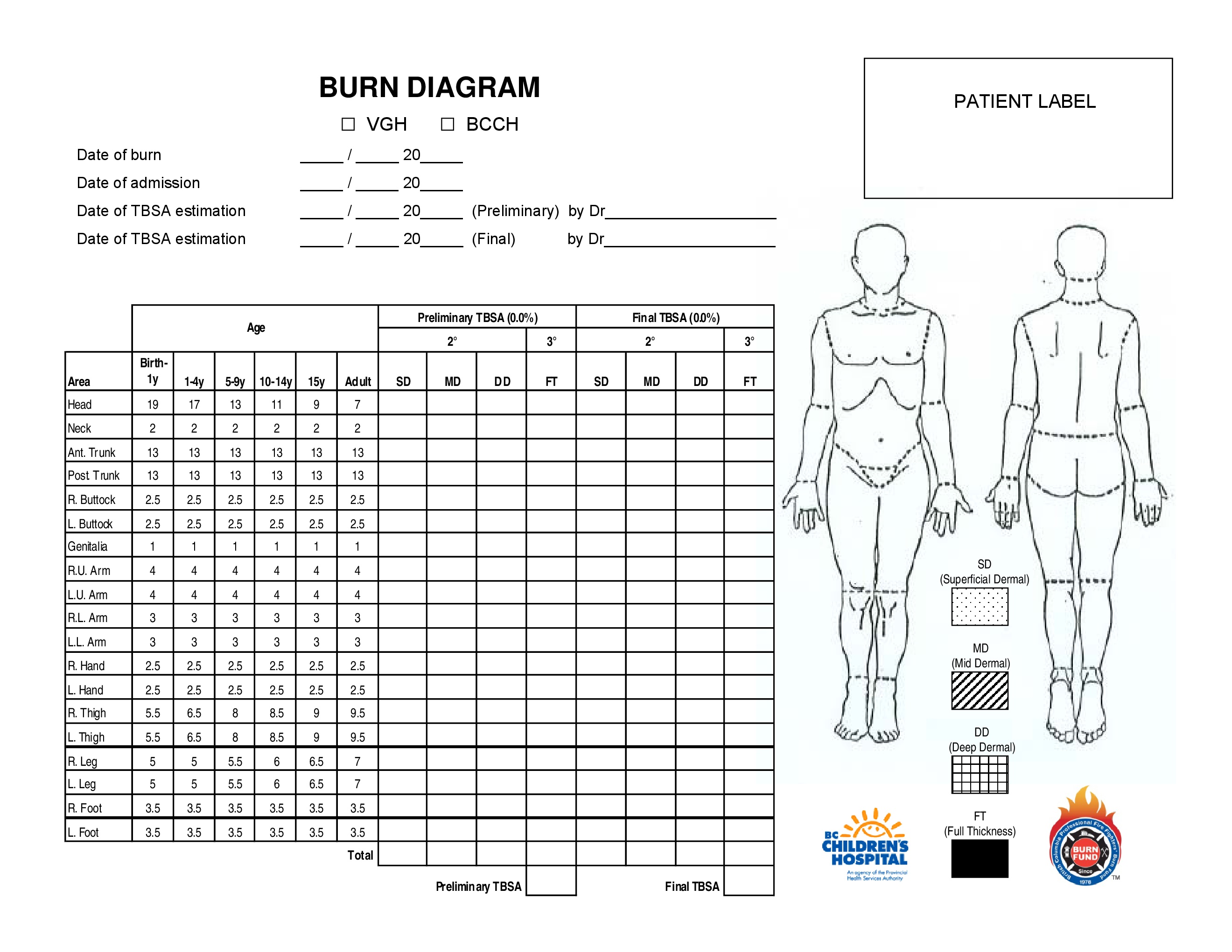
Pediatric Burn Diagram

PEDIATRIC BURNS AND SCALDSMODERN THERAPEUTIC CONCEPTS Semantic Scholar

Paediatric Emergency Medicine Minor Burns in Children

Paediatric TraumaPaediatric Burns Sub Guideline Trauma Victoria

Major Burns in Children Pediatric Emergency Playbook
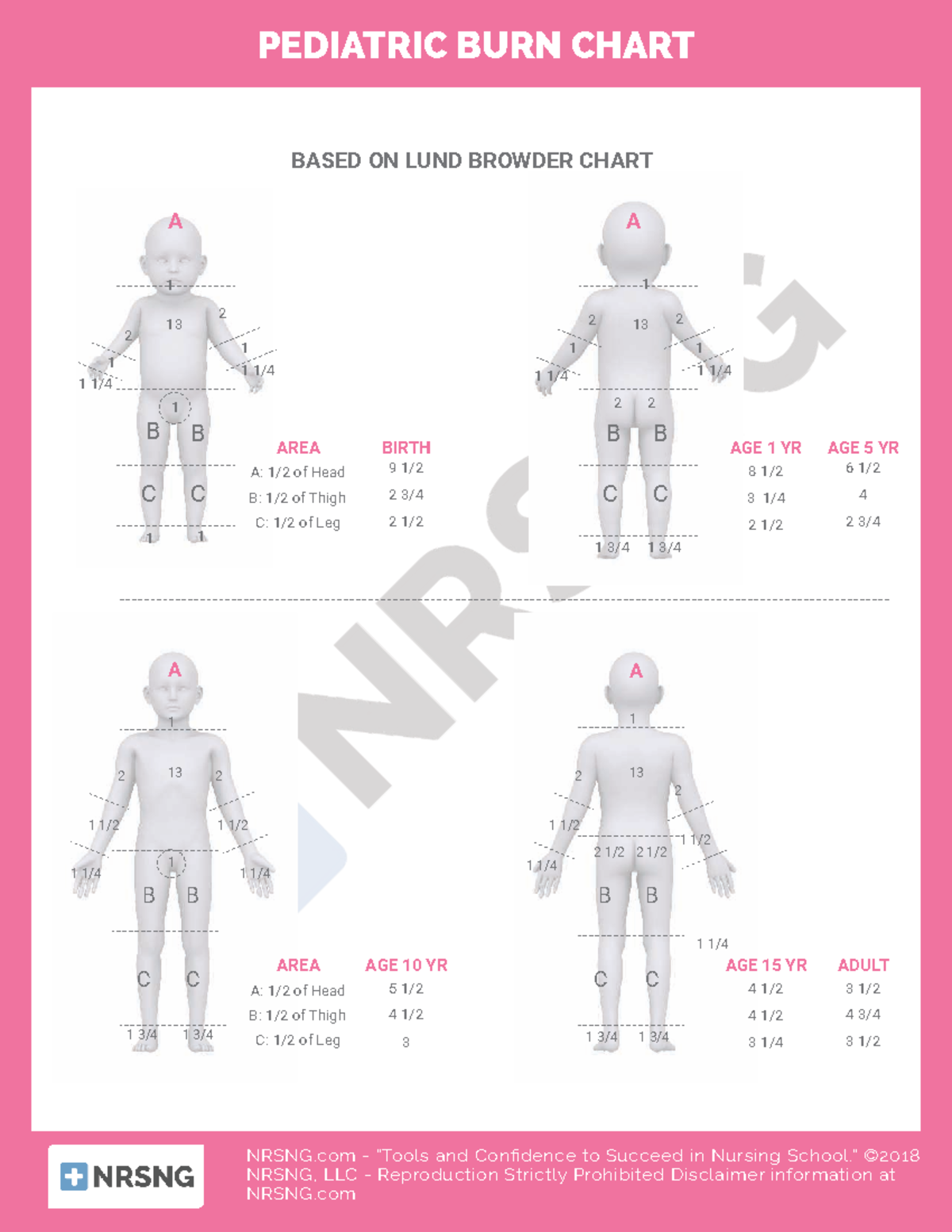
Cspeds001pediatric burn chart NRSNG “Tools and Confidence to
Burns Archives Limmer Education, LLC

Paediatric Emergency Medicine Minor Burns in Children
Lund And Browder Chart Burn Injuries in Children / Special
Burn Injuries Are Common In Children.
Overestimation Occurs When Simple Erythema Is Included.
Burn + Requirement For Inotropic Support.
Web Infant/Pediatric Lund And Browder Burn Chart.
Related Post: